
What should a trade service page include?
By Gael Parent, Webiwant
A trade service page should tell customers what you do, where you work, what the job can include and what happens when they enquire. Answer the question most likely to make them hesitate, show evidence from similar work and explain what affects the quote.
A patio customer may need to know whether ground preparation is included. A household arranging a specialist clean-up may first want to know who decides what can be removed.
- Heading[Service] in [town or county]
- Scope and quoteA typical job includes [work]. We assess [extras] before quoting.
- Main concern[A real customer question] and [your direct answer]
- Proof[A similar job or review] showing [what the customer can expect]
- Enquiry[The first action] and [what happens next]
Say what you do, where and for whom
Use the name a customer would recognise in the heading. For an installer serving County Kildare, “Patio installation in Kildare” identifies the service and area straight away. In the opening paragraph, say which jobs you take on and who you help.
Name the towns or counties you serve. If you take on planned installations, make that clear so a homeowner looking for an emergency repair can decide whether to call. Give related services their own pages when each has a distinct scope, customer questions and enquiry process.
Explain what the work includes
Describe the job in the order the work happens, including any checks that can change it.
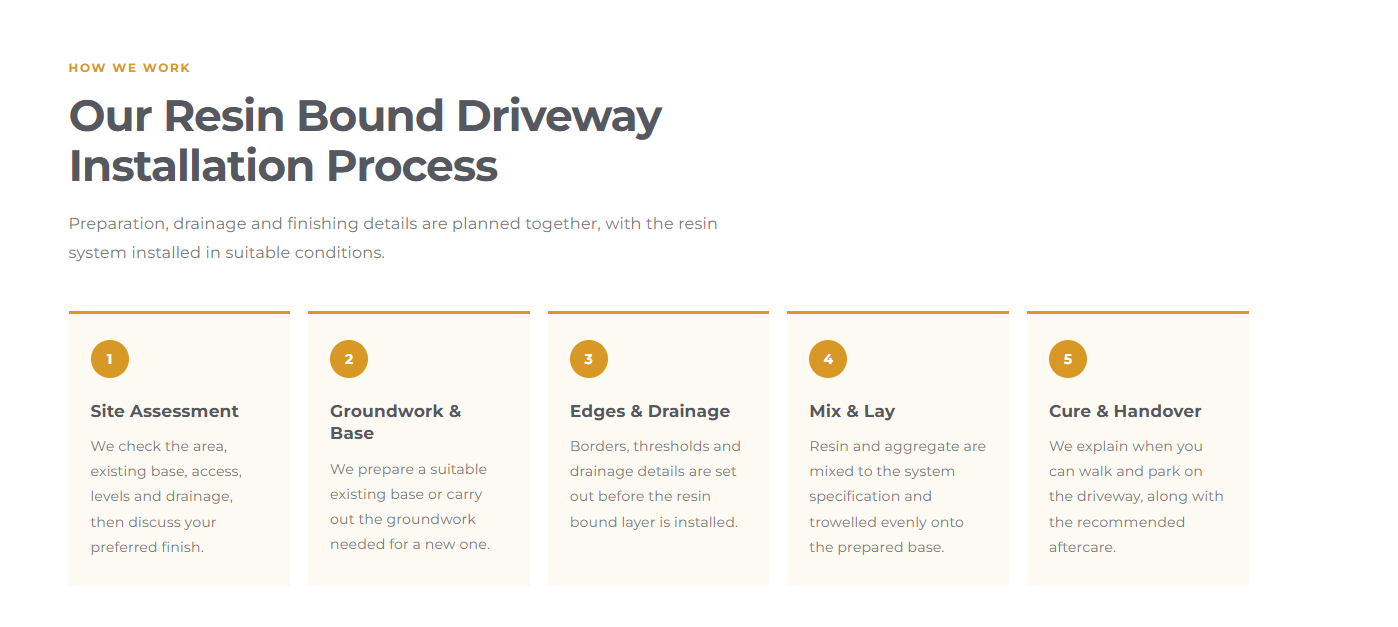
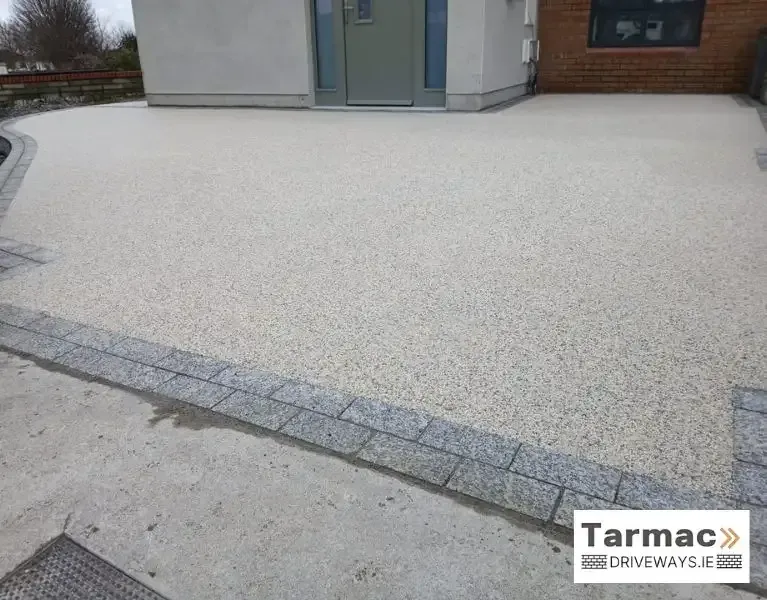
Tarmac Driveways is a Dublin-based driveway contractor. The team installs tarmac, asphalt and resin-bound driveways in Dublin, Kildare and nearby counties. Its resin-bound driveway page shows the work in five steps, from site assessment to handover.
Answer the question that could stop an enquiry
If you take the calls yourself, you probably already know which questions customers ask before they feel comfortable going ahead. If someone else handles enquiries, ask them what comes up most often. If you’ve been in the trade for years, chances are you could name a few off the top of your head. A kitchen fitter might explain whether existing fittings can stay in place. A clearance team can explain how it agrees what should be kept.
Put the answer beside the part of the service it affects. If you promise discretion or care, describe what your team does in practice. A short FAQ can cover remaining questions about access, timing or preparation.
A service-page example from Pest Control Dublin
Pest Control Dublin is a local pest control company that also provides specialist hoarding cleaning services. When we worked on their website, we used the service page to explain what a clean-up can include and how to request a survey. The companion guide walks readers through what to expect during the survey and the clean-up itself. Hoarding cleaning service page · Clean-up process guide
Illustrative baseline
We provide professional hoarding clean-up in Dublin. Contact us for a quote.
Worked opening
We help households and property managers in Dublin with hoarding cleaning. We start with a confidential survey to discuss access, which areas need attention and how you want belongings handled. Before clearing begins, we agree what to keep, set aside or remove.
Request a survey01 · First action

The button takes readers to the survey enquiry section.
02 · A question answered

The policy tells households how removals are agreed.
In a Dublin apartment block, lift access and agreed entry times can change how a clearance is planned. The survey lets the team discuss those practicalities, the rooms involved and the volume to clear before quoting. Deep cleaning can form part of the agreed work, with pest support considered if the team finds signs of activity.
Put evidence next to the claim it supports
A captioned photograph of a step or edge can show how a paving team finished a patio on a sloping site. A review that describes how a clearance team kept a household informed can support what you say about communication. Give each example a sentence of context so the reader can see what it shows.
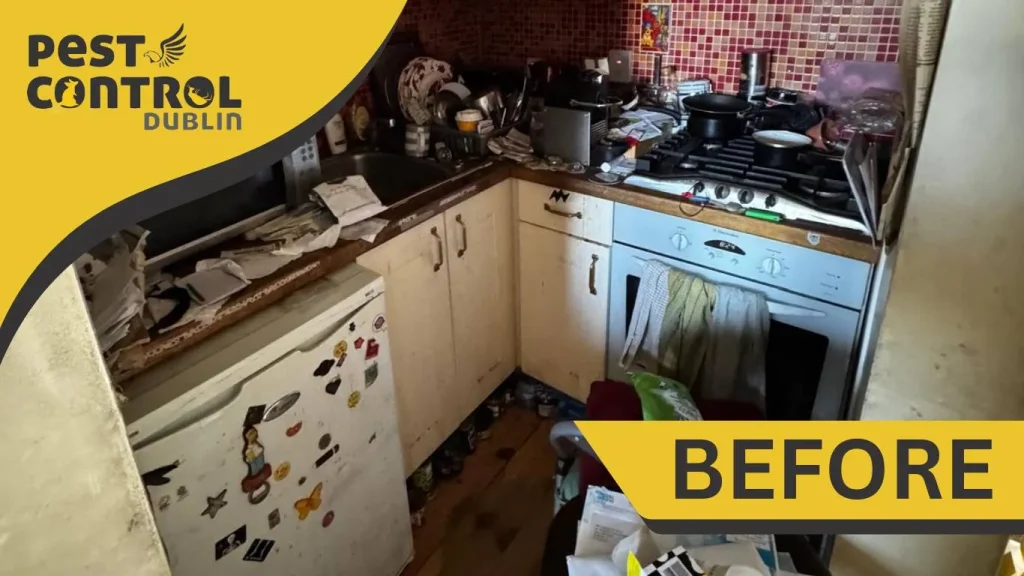
Before the agreed work, items cover parts of the worktop and hob.
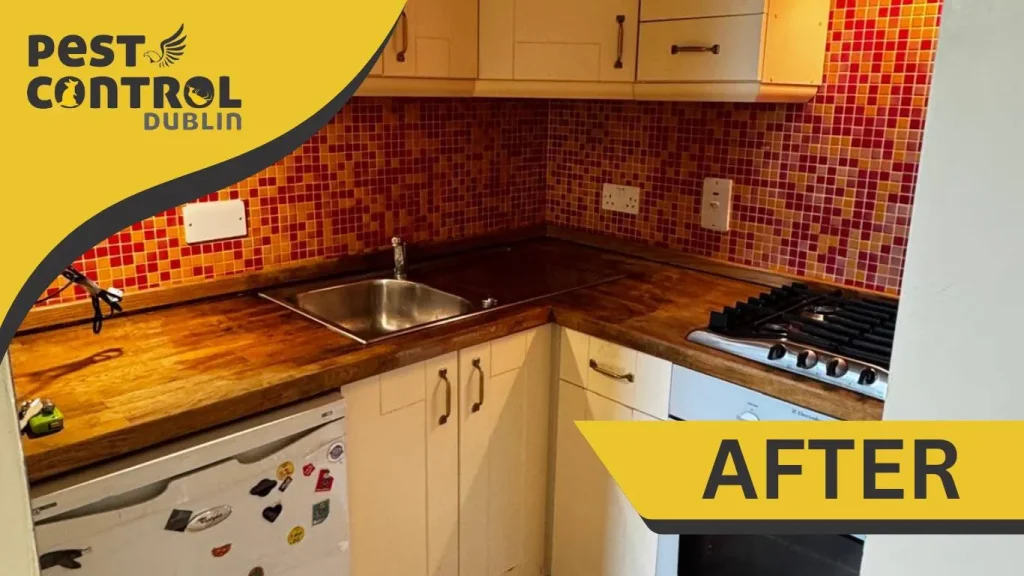
After clearing and cleaning, the sink and worktops are clear.
Link a short job summary to the full project where it adds detail. Agree what you can share from private homes and select images and captions that protect the customer’s privacy. For a process you can use after each job, see our guide to turning completed jobs into website content.
Explain pricing and what happens after an enquiry
If you have a reliable price for a defined job, explain what it covers and what could change it. If you need a site visit, say what you’ll assess and when the customer can expect a quote.
Match the button to your first step. A survey request fits a business that needs to see the property. “Send photos for an initial estimate” fits a team that can start with pictures. Tell people what to send, such as their area and a short description of the work, and specify any photos or measurements you need to begin.
Review one page on your phone
Open a service page as a new customer and work through these questions.
- Can I tell what you do and whether you cover my area?
- Can I find what the quote usually covers and what needs to be agreed?
- Does the page answer the question most likely to make me hesitate?
- Can I see evidence from a job like mine?
- Can I use the enquiry button and see what information to send?
Tap the enquiry button and check that it takes you to the promised next step. Ask the person who handles the jobs to check what you’ve written about scope and quotes. Start with the gap they hear about most often.
For help deciding which service to improve first, see our guide to prioritising SEO for Irish trade businesses.
Tell us about one service page
Send us its URL and tell us which jobs you want more enquiries for.